

I was thinking of what could be one of the most uninteresting topics in amateur radio, aside from two AM enthusiasts arguing for 10 minutes each over a few ohms of grid bias–when synapses connected and solder suckers popped into my mind. They may seem a small part of soldering technique, but the skill and capabilities of many hobbyists and technicians is built on certain materials, tools, and the type of work set before them.
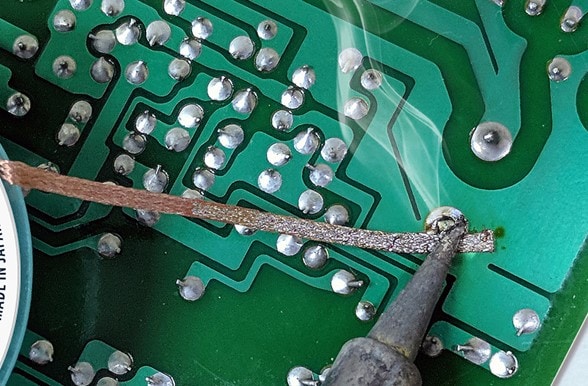
There are those who declaim that solder should be removed with a woven copper wick, and very carefully–and then cleaned with rosin solvent. At the other end of the scale are those who point a can of compressed air or freeze spray to the molten solder–flinging silvery, gossamer filaments of liquid lead everywhere. I must admit that the latter method works really well on old point-to-point wiring, some stubborn circuit pass-through eyelets, but not so much for polyester clothes, and more not so for bare legs and feet…
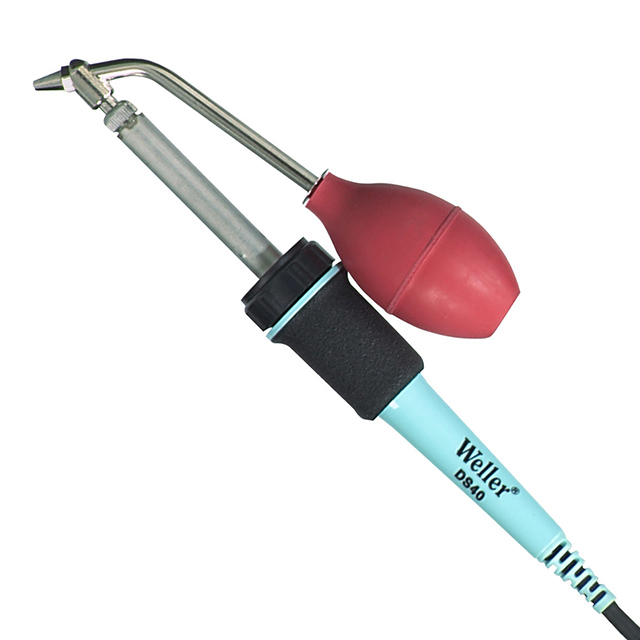
From a universal perspective, little else beats the vacuum solder sucker. They exist in many forms, from a simple bulb and Teflon tip, to those powered by a dedicated desoldering station. Do you recall when Weller introduced the DS40 in the late-70s? It was a blessing to many TV techs–a lot of who preferred the blast method. I spent many hours with one of these fickle beasts. The trick always was to suck the solder away and out of the hole–and not remove the eyelet and circuit trace at the same time. Oh, and then the joy of cleaning out the sucked up solder from the guts of the iron. Queue the freeze spray!
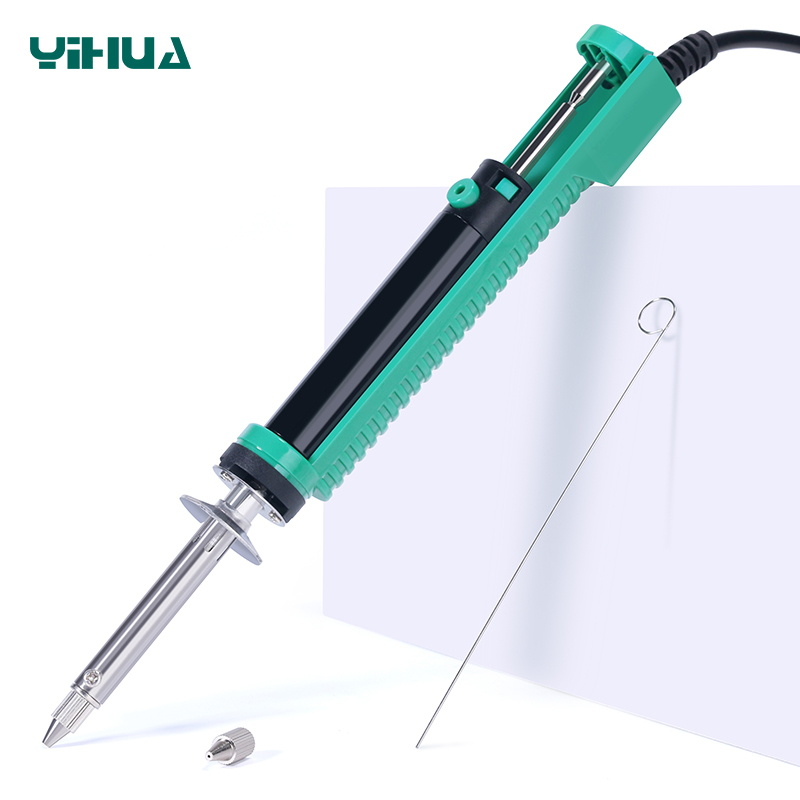
 In to this are now soldering irons with plunger vacuum suckers, such as the popular Yihua 929D-V (Yihua is a favorite brand of mine):
One of the important things I have learned in the past 60 or so year of bench life is this; never combine too many tools or functions together into one unit. One thing flakes out–other parts are lost to the malfunction as well. This is why I like simple, piston type suckers. But these things tend to be cheap and short lived–and awfully bulky and sometimes inconvenient to maneuver. My mind was set on the idea of buying a new sucker every year or so, as the working one slowly fell to pieces.
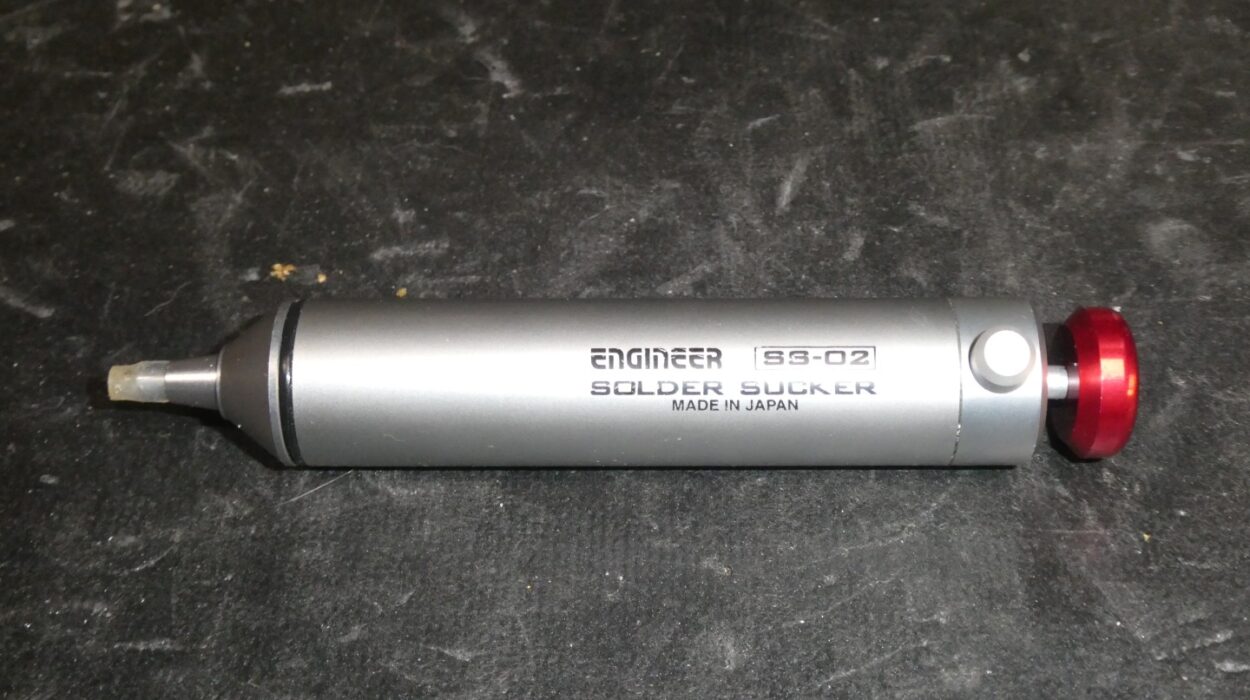
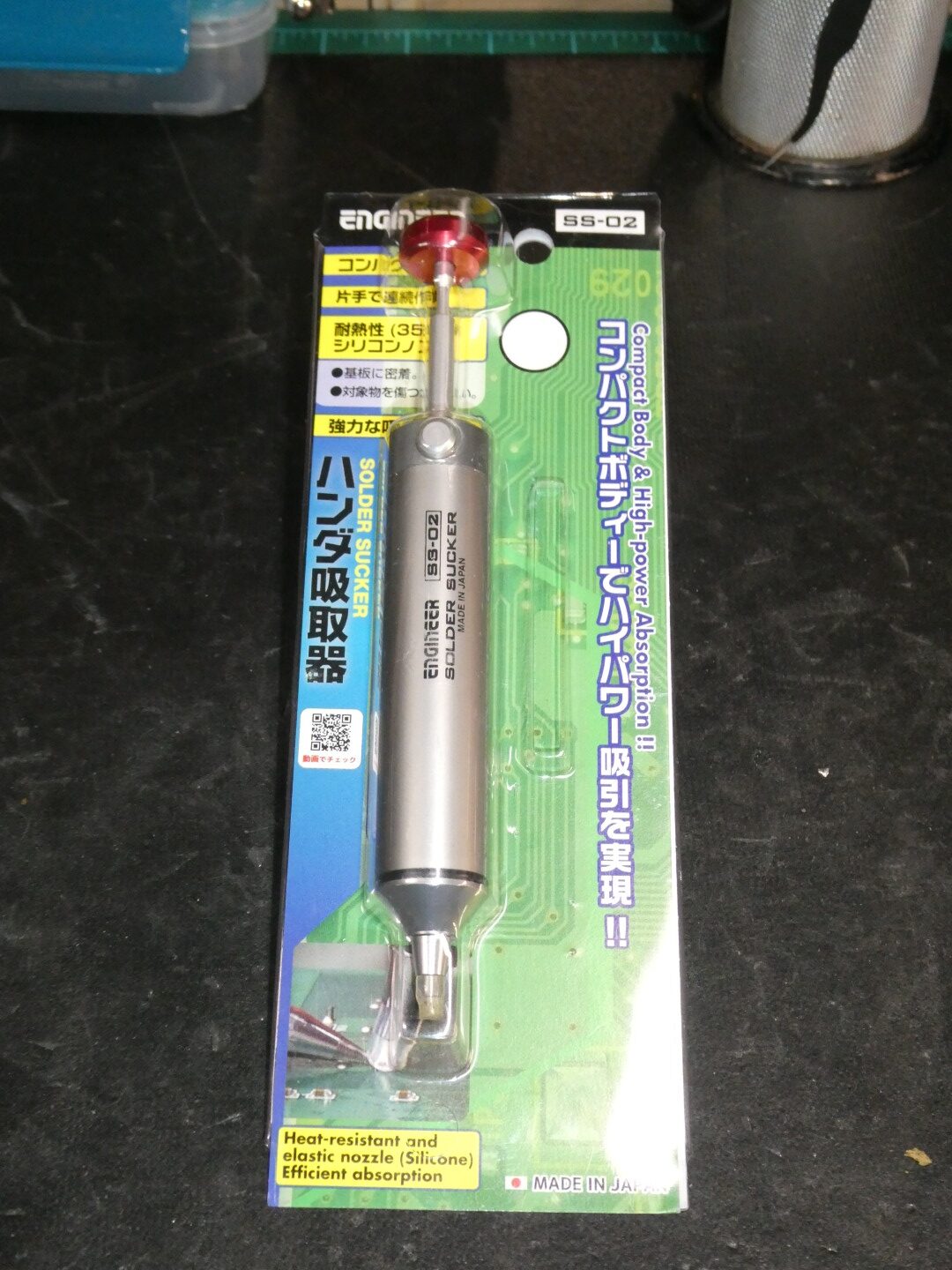
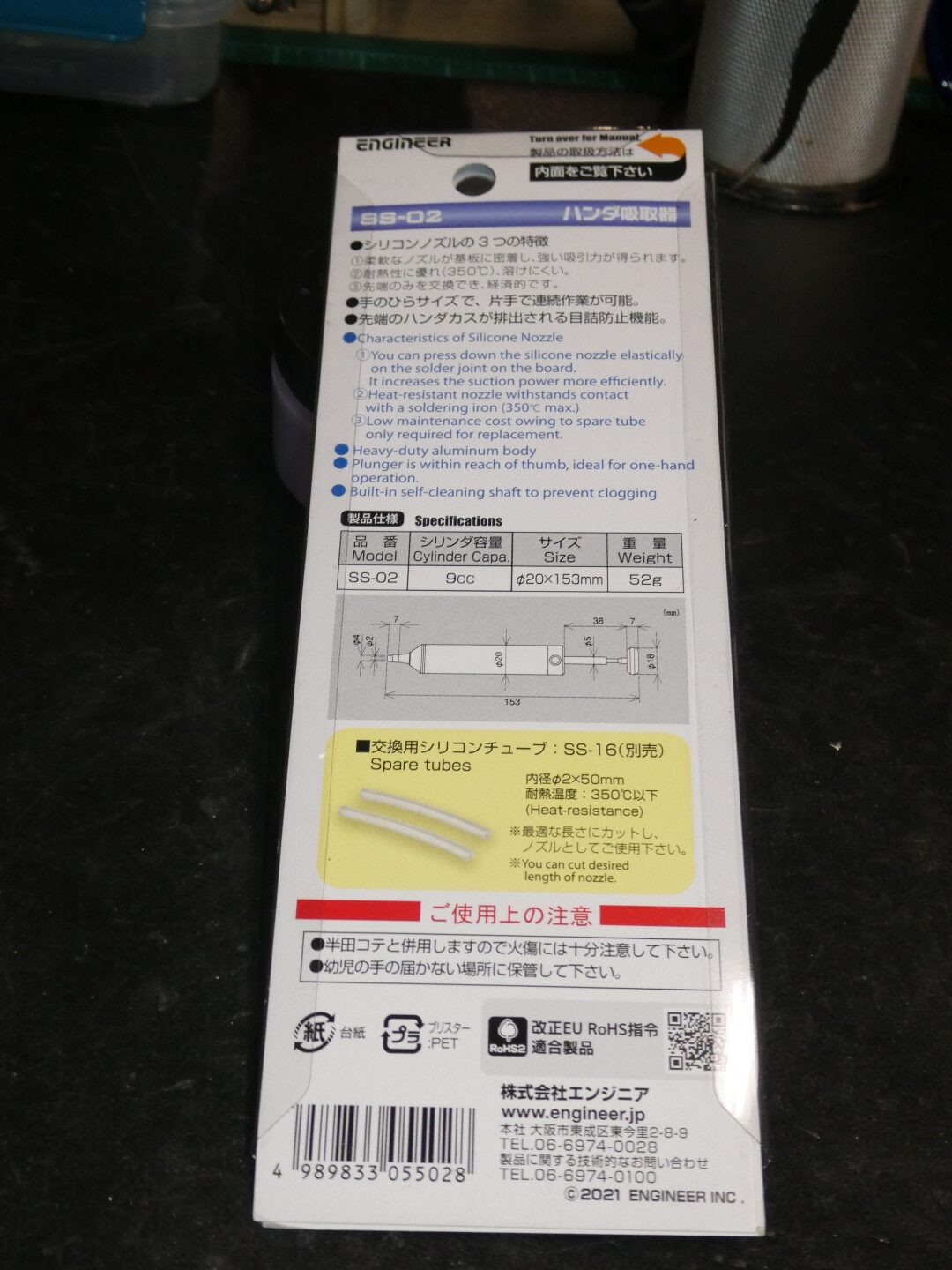
Enter now our Japanese friends, and the ‘improved’ solder sucker–the Engineer SS-02 tool! The genuine item (not a knockoff) retails on the net for around $30USD. This handy device is built like a little tank–it is short, well-made, easily cleaned–and tips are pieces of small clear silicone air line material that one can pick up at most hardware or pet stores. Or you can buy the little sections that they sell. I have added a piece of PVC along the side with zip ties to make deeper handling easy, and left the ziptie ends to put between the fingers of my hand to keep it rock solid!
 |
 |
I have used this critter everywhere on every manner of construction–100 year old point-to-point wiring, full-size component PC boards, and SMD layouts. Care is required for the latter, or it just might suck up the component being unsoldered!